

Women's Medical Aesthetics, Beauty Medica
What Do You Want to Improve?
Choose a Starting Path
Choose Your Starting Point
Prevention First
First Consultation Path
Skin & Hormone-Linked Shifts
Concern-Led Treatment Paths
Use a Concern Path When the Goal Is Clearer Than the Treatment.
Prevention First
Lines
Pigment & Texture
Jawline Filler & Profile
Face, Neck & Hands

Goal First
The Right Plan for What You Want to Improve
One of the Most Noticeable Areas
When the Mouth Area Changes, the Whole Face Reads It
- Use Botox when movement is aging the upper lip fastest
- Refine border definition without obvious volume
- Treat surface change above the lip when that is the real issue
- Choose differently for the lip body, the border, and the surrounding mouth area
- Discuss the different roles of structural fillers and softer lip products
The Conversation Most Practices Skip
When Skin Starts Behaving Differently
If the Shift Has a Pattern
Usually sounds like: “I want improvement, but I do not want to start too much too soon.”
Your clinician evaluates: expression strength, sun exposure history, skincare habits, and whether movement is truly starting to set into static lines.
Conversation often starts with: Prevention First →
Usually sounds like: “My skin looks dull, uneven, or more reactive than it used to.”
Your clinician evaluates: pigment pattern, barrier disruption, dehydration, and whether the issue is melasma, texture change, or recovery after stress and sleep loss.
Conversation often starts with: Pigment & Texture →
Usually sounds like: “My face looks softer, less defined, or less balanced and I do not know where to start.”
Your clinician evaluates: support loss, tissue descent, and whether filler, skin quality, or phased planning should come first.
Conversation often starts with: Jawline Filler & Profile →
From the Journal
Reads for Common Decision Points

Why a Shared Vision Matters in Aesthetic Care
Why credentials matter for safety, but artistry, listening, proportion, and shared aesthetic vision shape the final …
How Perimenopause Can Change Your Skin
Learn about skin changes around perimenopause and which questions help guide home care or a discussion about treatment.
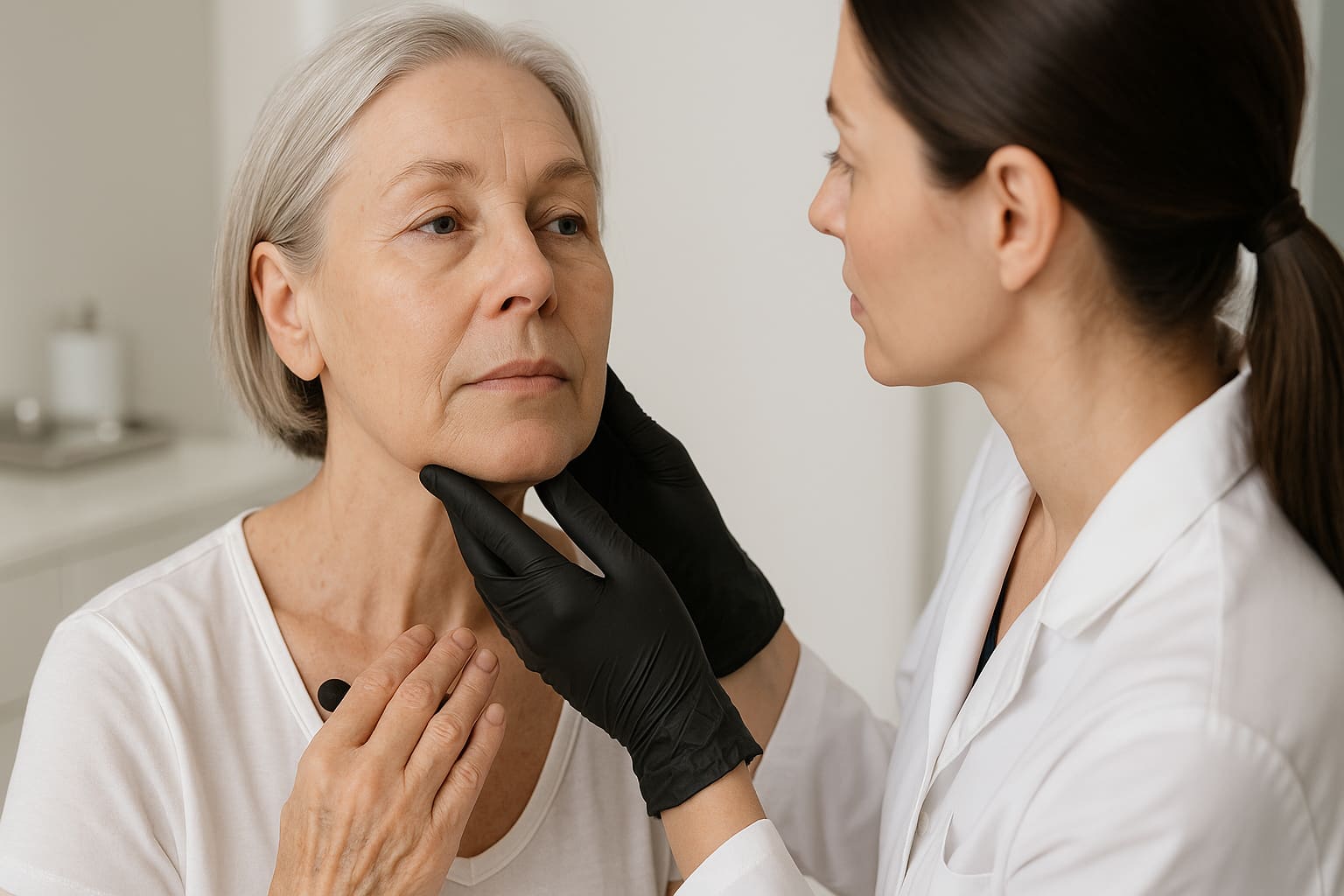
How a Woman’s Face Changes With Age
Explore how changes in facial support, skin, and hormones can affect appearance and guide a personal treatment …