

How Facial Structure Changes in Men
Explore changes in facial support and soft tissue, and how an assessment helps connect what you notice with suitable options.
- Beauty Medica Editorial TeamPatient Education & Research


Quick takeaways
- Structural change is the reason many men suddenly feel that their face looks older.
- Support loss, descent, and skin quality are not interchangeable problems.
- Treatment only makes sense when it matches the structure that changed.
Why your face looks different than it used to
The face does not age as one uniform surface. It changes structurally. Support shifts. Volume redistributes. The surface reflects those changes, but it is not the main source of them.
That distinction is what makes some treatment plans make sense and others feel disappointing.
The skeleton changes
Bone support changes with age, especially through the jaw, chin, and orbital area. When the underlying framework changes, the tissue on top of it reads differently. The result can look like fatigue, heaviness, or softening depending on where the support changed most.
The fat shifts and thins
Facial fat compartments thin and move. Some areas hollow. Others look heavier because tissue has descended. That is why “volume loss” and “sagging” often show up together even though they are different problems.
The skin thins and accumulates damage
Skin quality still matters, especially in a place like South Florida where sun exposure history compounds over time. But texture and pigment are only one layer of the story.
The muscles contribute
Muscle-driven changes, including clenching and habitual expression, also affect how the face reads. In some men, functional jaw tension becomes part of the structural picture.
What this means for treatment
If the main issue is support loss, filler or another structural approach may lead. If the issue is descent, that may call for a different conversation. If the surface is making everything look older, skin-focused work may need to come earlier.
The treatment recommendation should address the cause of the visible change.
Why the order of treatment matters
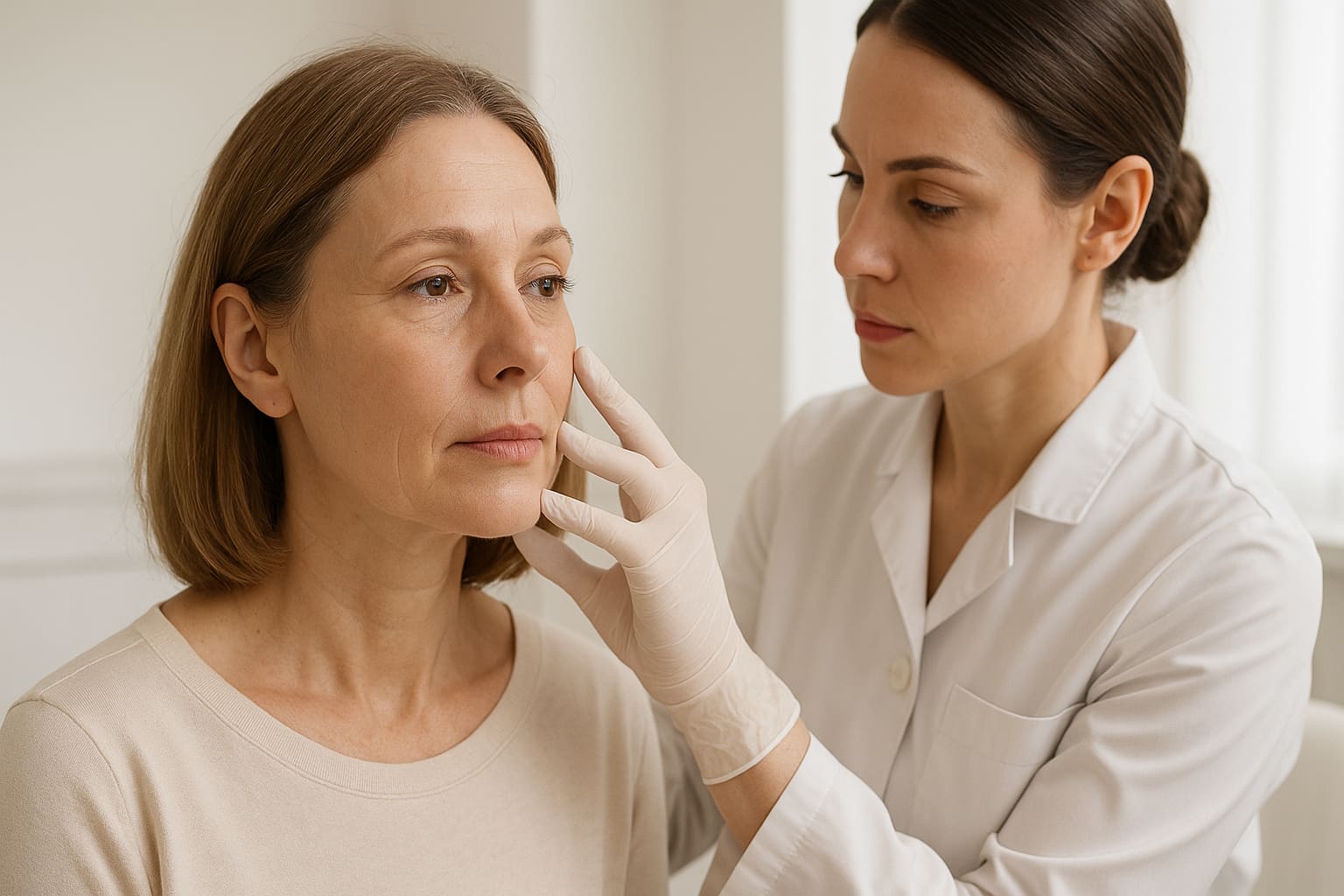
Elena examines facial support and surrounding tissue before recommending treatment. If several concerns are present, the plan can allow time to assess one change before adding another.
About the author
- Beauty Medica Editorial TeamPatient Education & ResearchThe Beauty Medica Editorial Team develops patient-friendly, source-based guidance on treatment planning, safety, skin quality, injectables, and realistic aesthetic decision-making. Clinical review is credited separately when it has been completed.
Continue your research
Useful next reading
Selected sources and companion stories that help readers verify, compare, and act.
Thread Lifts: Where They May Fit
Understand the difference between tissue descent and lost support, the limits of thread lifts, and questions to ask before treatment.
- Beauty Medica Editorial TeamPatient Education & Research
How a Man’s Face Changes With Age
Explore age-related changes in facial structure and skin, and how an assessment helps guide realistic treatment expectations.
- Beauty Medica Editorial TeamPatient Education & Research

How the Jawline and Neck Change With Age
Understand how bone, soft tissue, skin, and muscle affect the male jawline and neck, and what an assessment can clarify.
- Beauty Medica Editorial TeamPatient Education & Research